Artificial Intelligence and Reasoning
On Moonshot AI's Research and the Structure of Thinking Systems
Recent research from Moonshot AI provides another step forward in understanding how modern artificial intelligence systems reason through complex problems.
Much like the work coming out of Anthropic and the Transformer Circuits project, this research attempts to move beyond surface-level performance metrics and instead examine how models arrive at their outputs.
What emerges is not simply a more capable system, but a clearer picture of how reasoning itself is being structured inside these models, and why that structure matters for organizations attempting to adopt AI in a meaningful way.
For most businesses, artificial intelligence is still understood through the lens of output. A model writes, summarizes, or generates based on a prompt, and the quality of that output becomes the primary measure of value.
That framing is useful in early stages of adoption, but it quickly becomes limiting because it ignores the process that produces those outputs.
The Moonshot research shifts the focus away from what the model produces and toward how it arrives there, revealing that reasoning in these systems is not a single step, but a layered process that unfolds over time.
Reasoning as a Structured Process
Human reasoning is rarely instantaneous. When solving a complex problem, we do not arrive at an answer in a single step, but instead move through intermediate states, testing ideas, revising assumptions, and gradually refining our understanding.
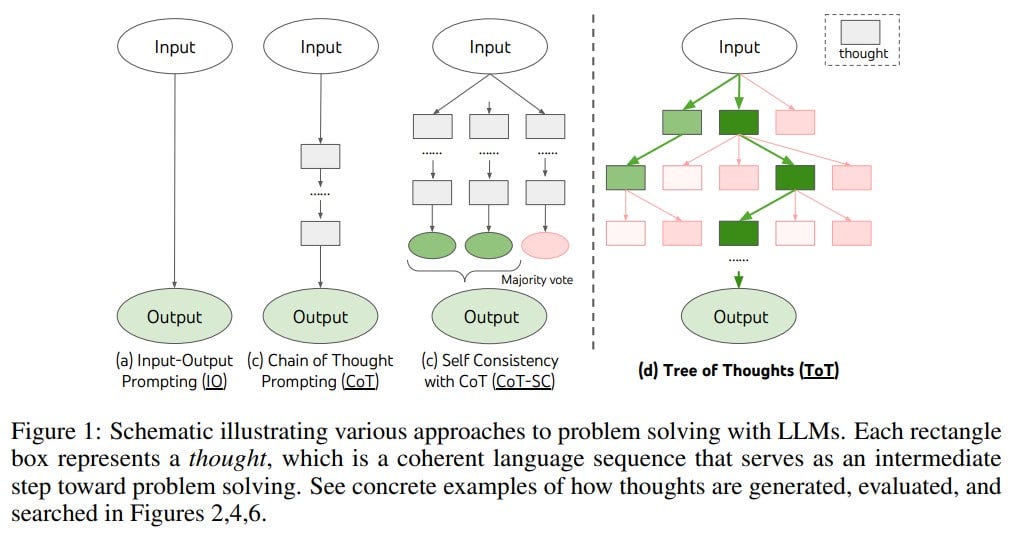
This process is often hidden when we communicate results, but it is essential to how those results are produced.
The research from Moonshot AI suggests that modern language models are beginning to exhibit a similar structure. Rather than generating answers directly, they can be guided to produce intermediate reasoning steps, effectively externalizing a process that would otherwise remain implicit.
What these types of visualizations demonstrate is that reasoning can be decomposed into a sequence of smaller operations, each building on the previous one. The model does not simply jump from question to answer, but constructs a path between them.
This path is not always visible by default, but when exposed, it reveals that the model is capable of maintaining context across multiple steps and using that context to guide its output.
This is an important distinction because it reframes what intelligence in these systems looks like. Instead of viewing intelligence as a static capability, it becomes a dynamic process that unfolds through structured computation.
From Output Generation to Process Control
The ability to generate intermediate reasoning steps introduces a new layer of control over how models behave. If reasoning can be structured, then it can also be guided, constrained, and optimized.
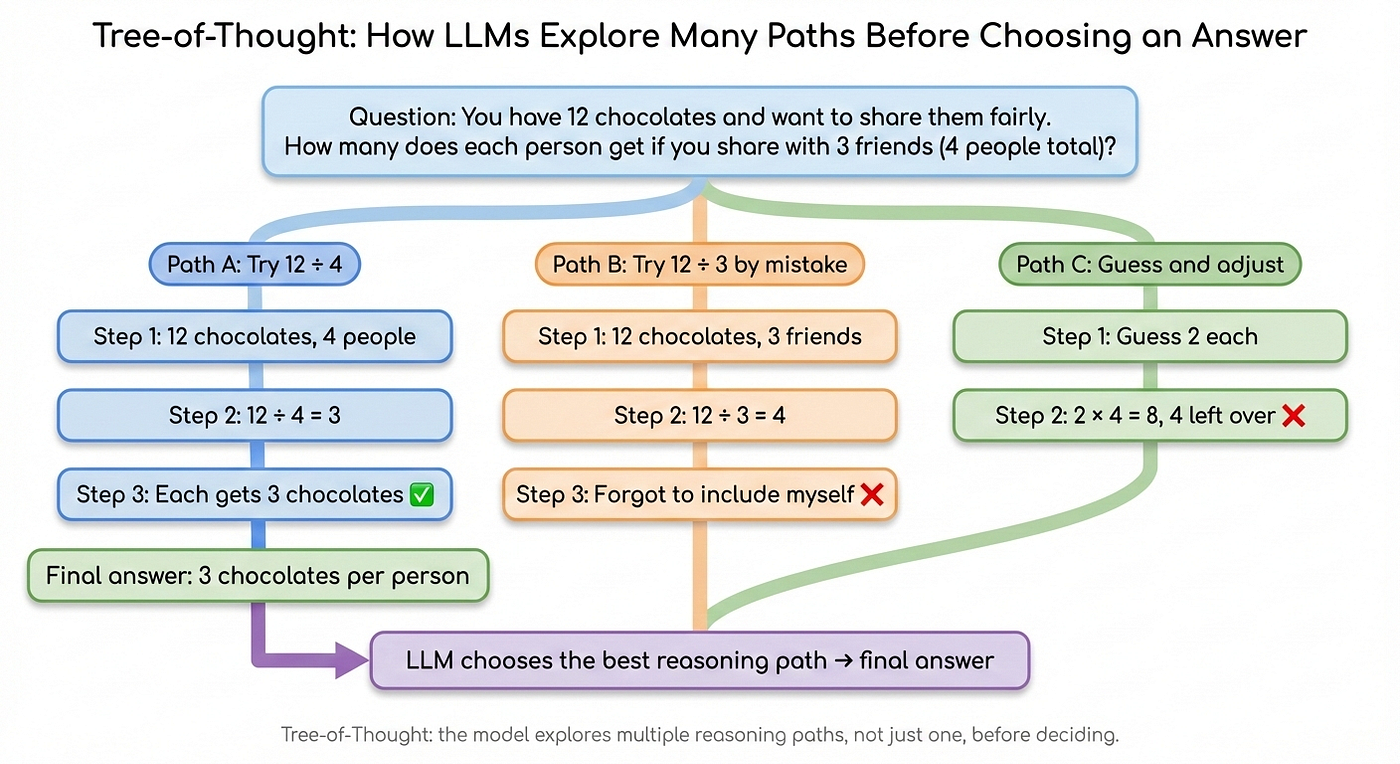
The research explores methods for improving reasoning by shaping the process itself rather than only evaluating the final answer. This includes techniques that encourage models to explore multiple possible paths, verify intermediate steps, or revisit earlier assumptions when inconsistencies arise.
What begins to emerge is a system that resembles a search process rather than a direct mapping. The model generates possibilities, evaluates them, and refines its path toward a solution.
This does not imply true understanding in a human sense, but it does indicate that the system is operating within a structured framework that supports more reliable reasoning.
For organizations, this shift is significant. It suggests that the effectiveness of AI systems is not solely determined by model size or training data, but by how the reasoning process is designed and managed.
The Reliability Problem
One of the central challenges in deploying AI within business environments is reliability. A model may produce correct outputs in many cases, but small inconsistencies can undermine trust, particularly in high-stakes applications.
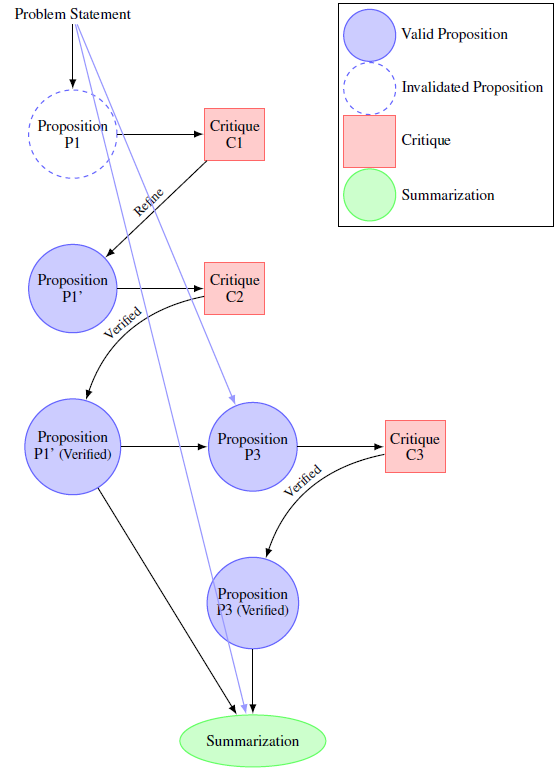
The Moonshot research addresses this by focusing on how reasoning can be made more consistent through structure.
When models are encouraged to reason step by step, they tend to produce more accurate and stable results, particularly on complex tasks that require multiple layers of logic. This is not because the model has become inherently more intelligent, but because the structure of the process reduces the likelihood of error propagation.
In other words, reliability emerges from process, not just capability.
This has direct implications for how businesses should approach AI adoption. Simply deploying a powerful model is not sufficient. The way that model is used, specifically how its reasoning process is structured, plays a critical role in determining whether it produces trustworthy results.
Implications for Enterprise AI Adoption
For organizations, this research reinforces a pattern that is becoming increasingly clear across multiple areas of AI development. The value of these systems does not come from raw capability alone, but from how that capability is shaped within real workflows.
If reasoning can be structured, then organizations must take an active role in defining that structure. This includes designing prompts and systems that encourage step-by-step thinking, implementing validation layers that check intermediate outputs, and training employees to interact with AI in a way that leverages these capabilities rather than bypassing them.
Without this level of integration, AI remains a surface-level tool, useful for isolated tasks but disconnected from the deeper processes that drive business decisions. With it, AI becomes part of the reasoning infrastructure of the organization, influencing how problems are approached and solved.
This is where training, consulting, and software integration become essential. Employees must understand not just how to use AI, but how to guide its reasoning. Workflows must be redesigned to incorporate multi-step processes rather than single-step outputs. Systems must be built to support iteration, verification, and refinement.
The Shift From Answers to Thinking Systems
What the Moonshot research ultimately highlights is a transition in how artificial intelligence should be understood. We are moving away from systems that simply provide answers and toward systems that participate in the process of thinking.
This does not mean that AI is becoming human, nor does it imply true reasoning in a philosophical sense. What it does mean is that the structure of these systems is beginning to mirror aspects of how reasoning operates, breaking problems into parts, exploring possibilities, and refining outputs over time.
For businesses, this shift changes the nature of adoption. The goal is no longer to extract answers from a model, but to integrate that model into the processes that generate those answers.
Organizations that recognize this will approach AI differently. They will invest in structuring reasoning rather than simply consuming outputs, understanding that the reliability and value of these systems emerge from how they are used, not just what they are.
A Broader Perspective on Intelligence
When viewed alongside other recent research, a consistent theme begins to emerge. Artificial intelligence is not developing intelligence in the way humans experience it, but it is constructing systems that replicate key functional components of cognition, whether that is prioritization, as seen in emotional structuring, or multi-step reasoning, as seen here.
These components do not require awareness to be effective. They require structure.
For organizations, this is the level at which AI must be understood. Not as a collection of tools, but as a set of systems that influence how information is processed, how decisions are made, and how work is ultimately performed.
And as with any system, its value is determined not just by its capabilities, but by how well it is aligned with the goals of those who use it.
The businesses that build around structured reasoning rather than one-shot output will be the ones that turn AI from a tool into durable operational leverage.
Source: Moonshot AI reasoning research