Gemma 4 and the Rise of Small Models
On the Changing Structure of Intelligence and What It Means for Enterprise AI
Recent work from Google, particularly the release of Gemma 4, marks an important point in the development of artificial intelligence systems, not because it represents a dramatic leap in raw capability, but because it reflects a shift in how intelligence is being packaged, distributed, and ultimately used.
While much of the public conversation around AI has focused on increasingly large models with massive parameter counts, this new direction suggests that scale alone is no longer the defining variable.
Instead, we are beginning to see a transition toward smaller, more efficient systems that can operate locally, integrate more directly into workflows, and provide a different kind of value to organizations.
This shift is subtle when viewed from the perspective of benchmarks, but it becomes more significant when considered in the context of how businesses actually deploy technology.
The question is no longer simply how powerful a model can be in isolation, but how effectively that capability can be integrated into real environments where latency, privacy, cost, and control all play a role.
In that sense, the release of Gemma 4 is less about competing with the largest models and more about redefining where and how intelligence can exist.
The Emergence of Smaller Parameter Models
To understand why smaller models are becoming more relevant, it is useful to revisit the trajectory of AI development over the past several years.
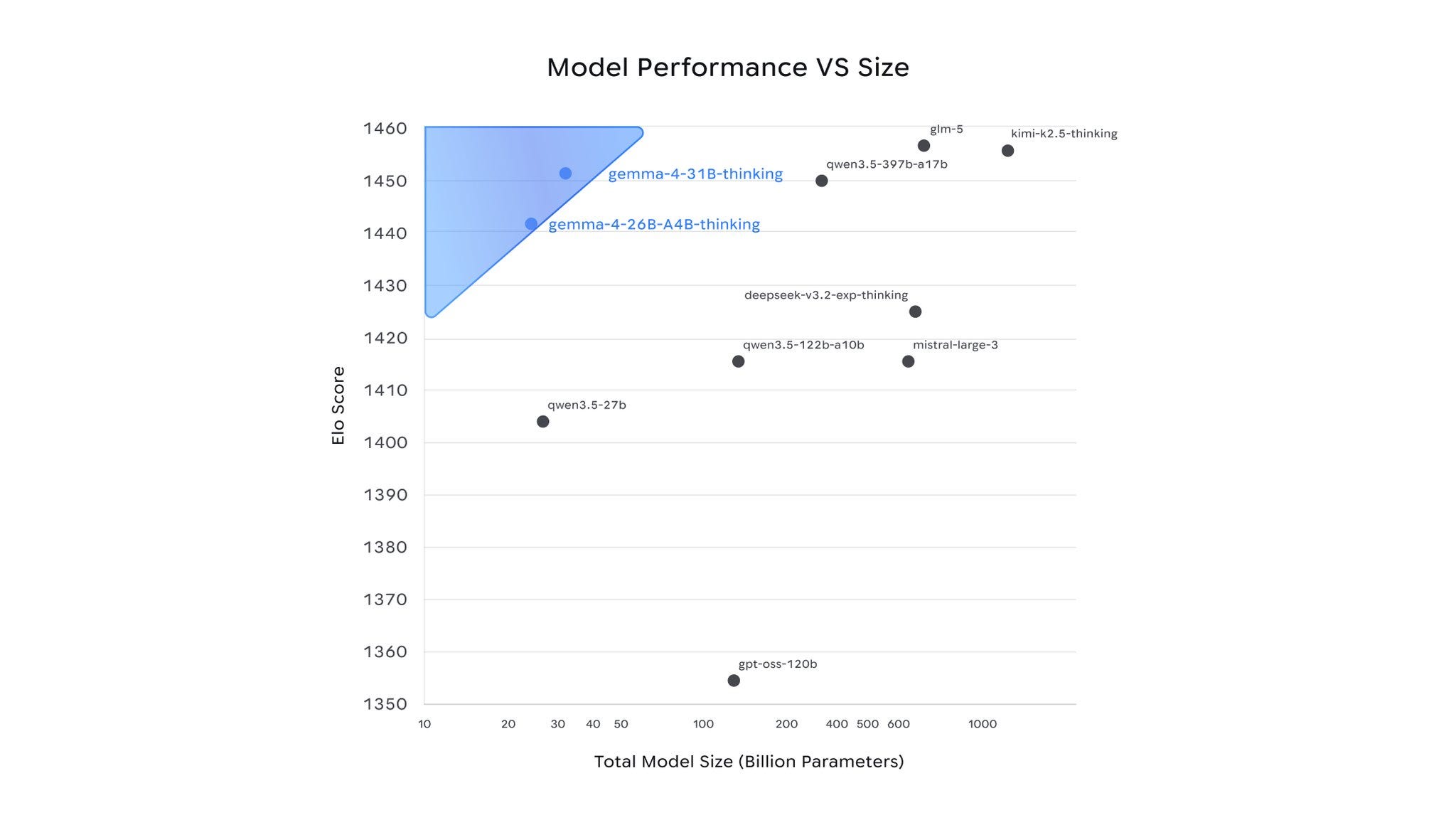
Early progress was driven largely by scaling, increasing parameter counts, expanding datasets, and leveraging more compute to improve performance. This approach produced impressive results, but it also introduced limitations.
Larger models require significant infrastructure, rely on centralized deployment, and often operate as external systems rather than integrated components of an organization's internal processes.
Gemma 4 represents a different approach. While still capable, it is designed with efficiency and accessibility in mind, allowing it to run in environments where larger models cannot.
This includes local deployments, edge devices, and enterprise systems that require tighter control over data and operations. The implication is that intelligence is no longer confined to centralized platforms, but can be distributed across the organization itself.
This distribution changes the role of AI. Instead of acting as a distant service, it becomes something embedded within the workflow, closer to the data, closer to the decision, and more responsive to the specific context in which it operates.
Comparing Gemma 4 to Larger Models
When comparing Gemma 4 to larger models, the differences are not simply a matter of performance metrics, but of tradeoffs.
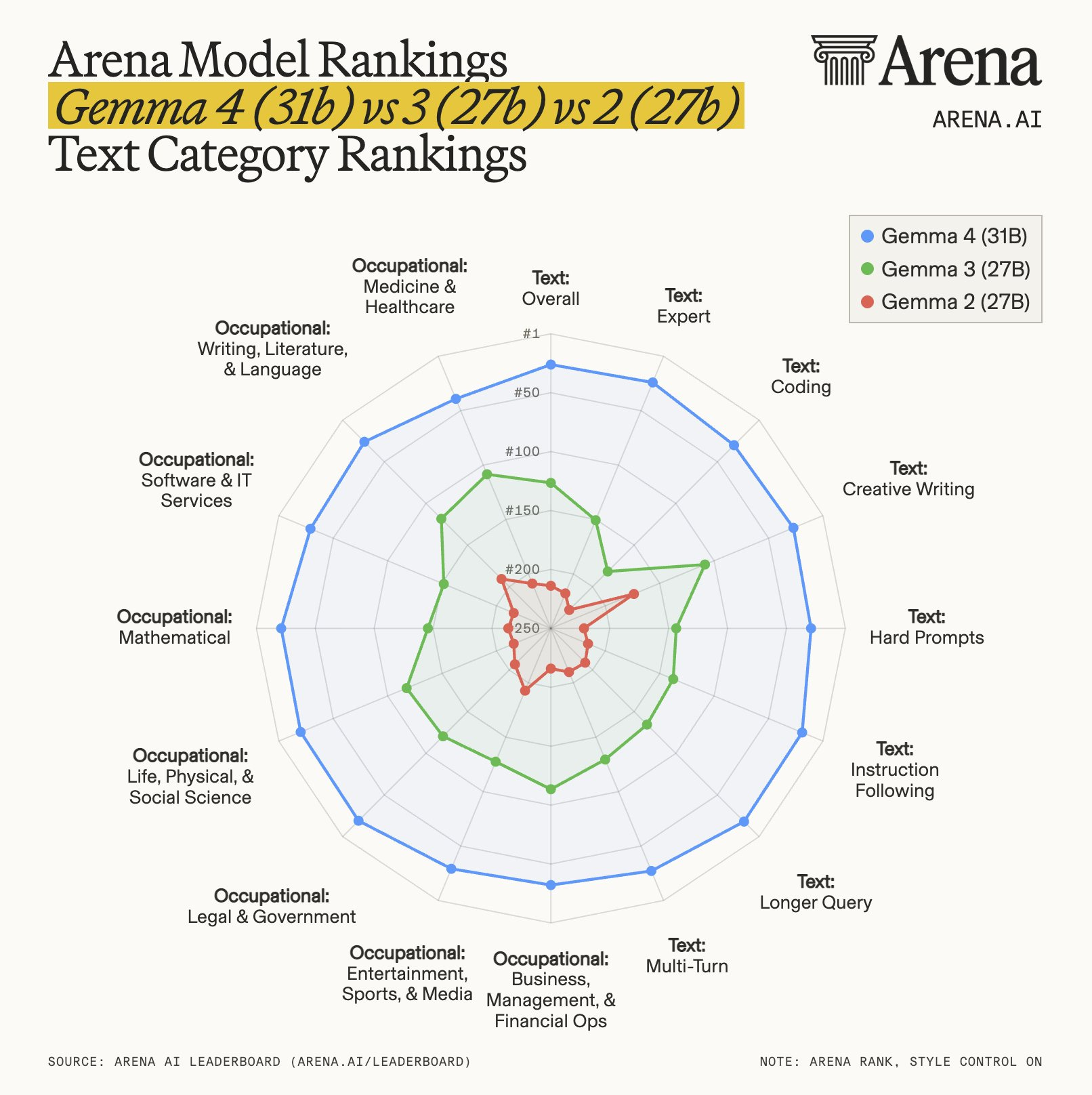
Larger models tend to achieve higher scores on complex benchmarks, particularly those that require extensive reasoning or broad knowledge. However, they also come with increased cost, higher latency, and greater dependency on external infrastructure.
Smaller models, by contrast, operate within tighter constraints but offer advantages in speed, cost efficiency, and deployability. They can be run locally, integrated into internal systems, and tailored to specific use cases without relying on constant external communication.
In many enterprise contexts, these characteristics are more valuable than marginal improvements in benchmark performance.
This does not suggest that smaller models will replace larger ones entirely. Rather, it indicates that the ecosystem is becoming layered, with different models serving different roles depending on the requirements of the task.
Large models provide broad capability, while smaller models provide precision, control, and integration.
The Shift Toward Local and Embedded Intelligence
As models like Gemma 4 become more accessible, we begin to see a shift from centralized intelligence to distributed systems. This shift has several implications for how businesses approach AI adoption.
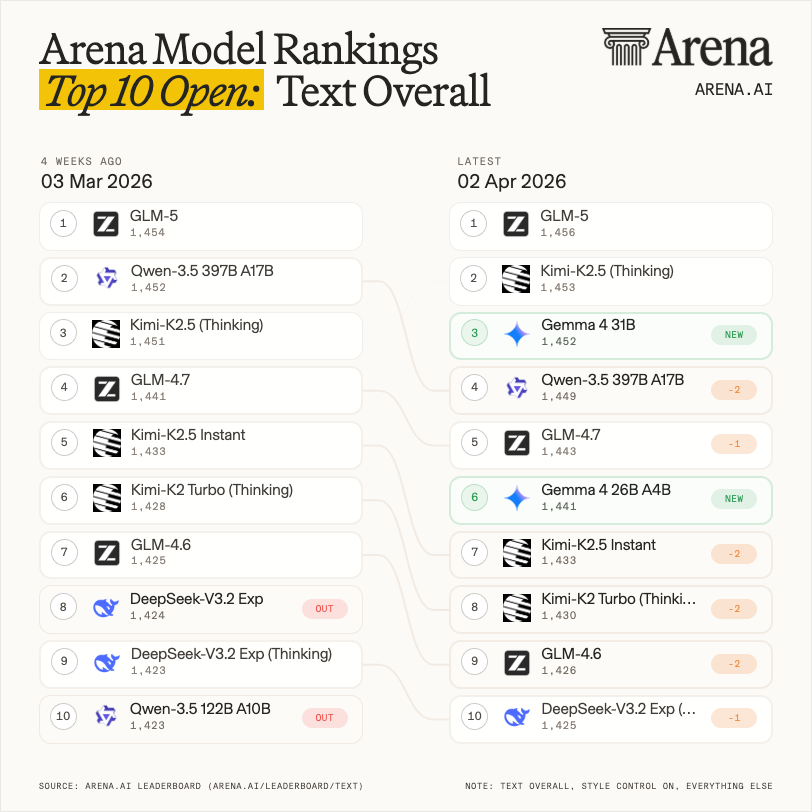
First, it changes the relationship between data and computation. When models can run locally, sensitive data no longer needs to be sent to external systems for processing. This improves privacy, reduces risk, and allows organizations to maintain greater control over their information.
Second, it reduces latency and increases responsiveness. Decisions can be made closer to where data is generated, enabling faster and more context-aware interactions. This is particularly important in operational environments where delays can impact outcomes.
Third, it allows for deeper integration into workflows. Instead of treating AI as a separate tool, organizations can embed it directly into their processes, making it part of how work is performed rather than an external layer applied after the fact.
These changes move AI from being a service to being infrastructure.
What This Means for Enterprise AI Strategy
The rise of smaller models introduces a new set of considerations for organizations. The question is no longer whether to use AI, but how to structure it within the business. This requires a shift in thinking from model selection to system design.
Organizations must decide where intelligence should reside, what tasks should be handled locally versus centrally, and how different models should interact within a broader architecture.
In many cases, the optimal solution will involve a combination of both large and small models, each serving a specific role within the system.
This is where training, consulting, and implementation become critical. Employees need to understand not just how to use AI, but how it fits into their workflows. Systems must be designed to integrate models in a way that aligns with business goals. And software must be built to support these integrations in a scalable and maintainable way.
Without this structure, the benefits of smaller models may not be fully realized. With it, organizations can create systems that are more efficient, more secure, and more aligned with their operational needs.
A Broader Perspective on Intelligence
The development of models like Gemma 4 suggests that the future of artificial intelligence will not be defined solely by scale, but by structure. Intelligence is no longer concentrated in a single system, but distributed across multiple layers, each optimized for a different purpose.
This mirrors patterns seen in other technological systems, where centralized and decentralized components coexist and complement one another. In computing, this took the form of cloud and edge architectures. In AI, it is beginning to take the form of large and small models working together.
For businesses, this represents an opportunity to rethink how intelligence is deployed. Instead of relying entirely on external systems, organizations can begin to build their own internal capabilities, embedding AI into the fabric of their operations.
In this sense, the significance of Gemma 4 is not just in what it can do, but in what it represents. It signals a shift toward a more distributed, integrated, and controllable form of intelligence, one that is better suited to the realities of enterprise environments.
And as with previous technological shifts, the organizations that understand this change early will be the ones that are best positioned to take advantage of it.
The real strategic question is no longer how to access intelligence at maximum scale, but how to place the right kind of intelligence at the right point inside the business.
Source: Google Gemma research