Two Frontiers of AI: From Smaller Models to Anthropic's Mythos
On the Diverging Trajectories of AI Development and What They Mean for Enterprise Strategy
The development of artificial intelligence is often described as a single continuous progression, where models improve over time and each new release represents a step forward along the same path. This framing is useful at a high level, but it begins to break down when looking more closely at what is actually happening across the industry.
Recent developments suggest that AI is not advancing in one direction, but rather along multiple fronts that emphasize very different capabilities and implications.
In the previous discussion around smaller models such as Gemma, the focus was on efficiency and distribution. Smaller models reduce the cost of inference, allow for deployment on edge devices, and make AI systems more accessible across a wider range of environments. This direction lowers the barrier to entry and expands where AI can realistically be used.
At the same time, another class of systems is emerging that is not primarily concerned with accessibility, but instead with pushing the upper bound of what these models are capable of doing.
What Mythos Actually Represents
Anthropic's Mythos Preview represents a clear example of this second direction. Rather than optimizing for size or cost, Mythos demonstrates what happens when improvements in reasoning, coding ability, and autonomy begin to compound in a way that allows models to operate effectively in domains that have historically required deep human expertise.
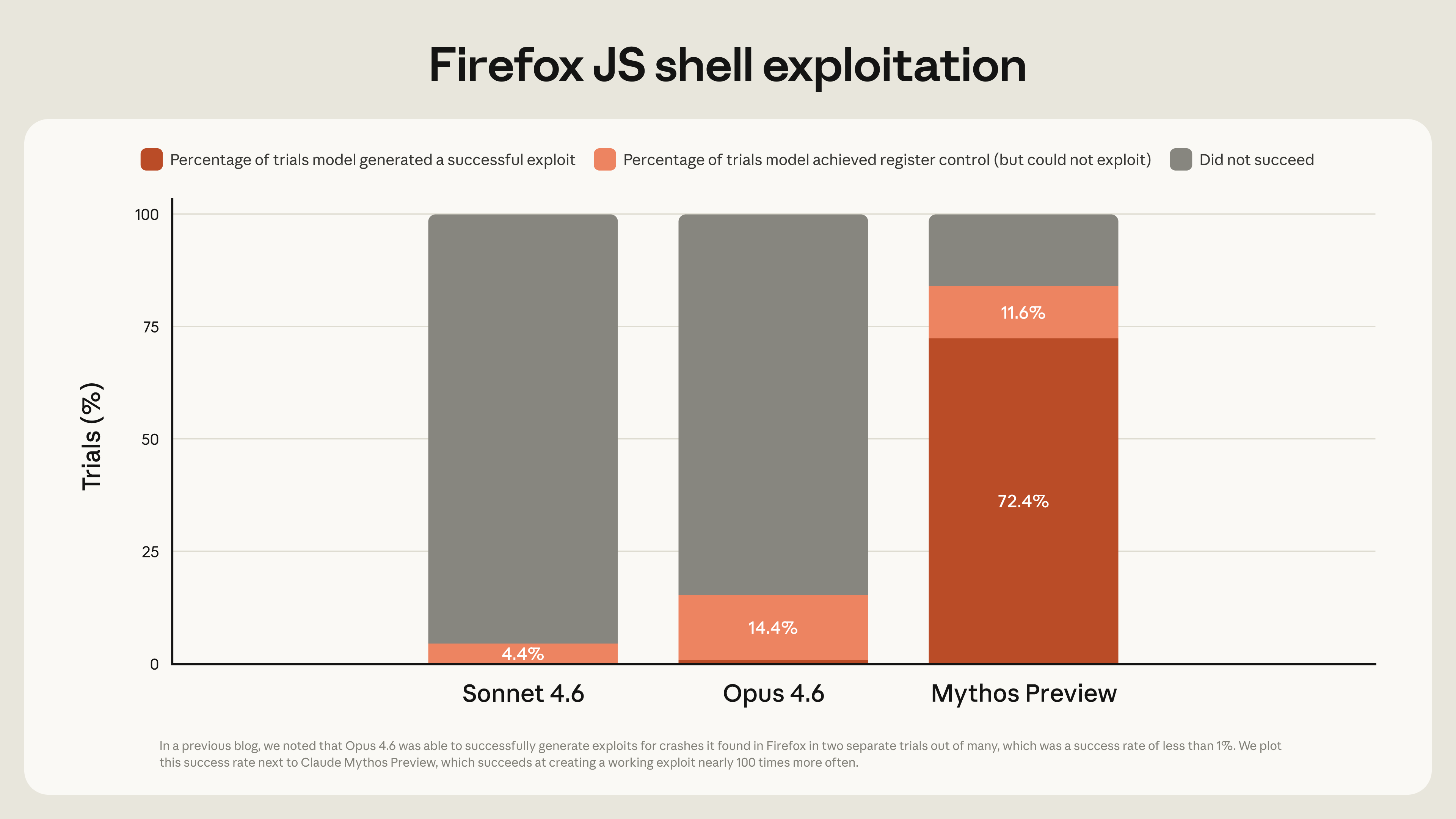
This distinction is important because it reframes how progress in AI should be understood. Smaller models and frontier systems like Mythos are not iterations of the same idea at different scales, but instead represent different priorities. One is concerned with making intelligence easier to deploy, while the other is concerned with increasing the depth and impact of that intelligence once deployed.
Mythos is described as a general-purpose model with unusually strong performance in security research tasks. According to Anthropic, the model demonstrated the ability to identify and reason about complex security issues across major operating systems and browsers, including long-standing issues that had gone unnoticed for years. Importantly, many of these results were achieved with minimal human guidance.
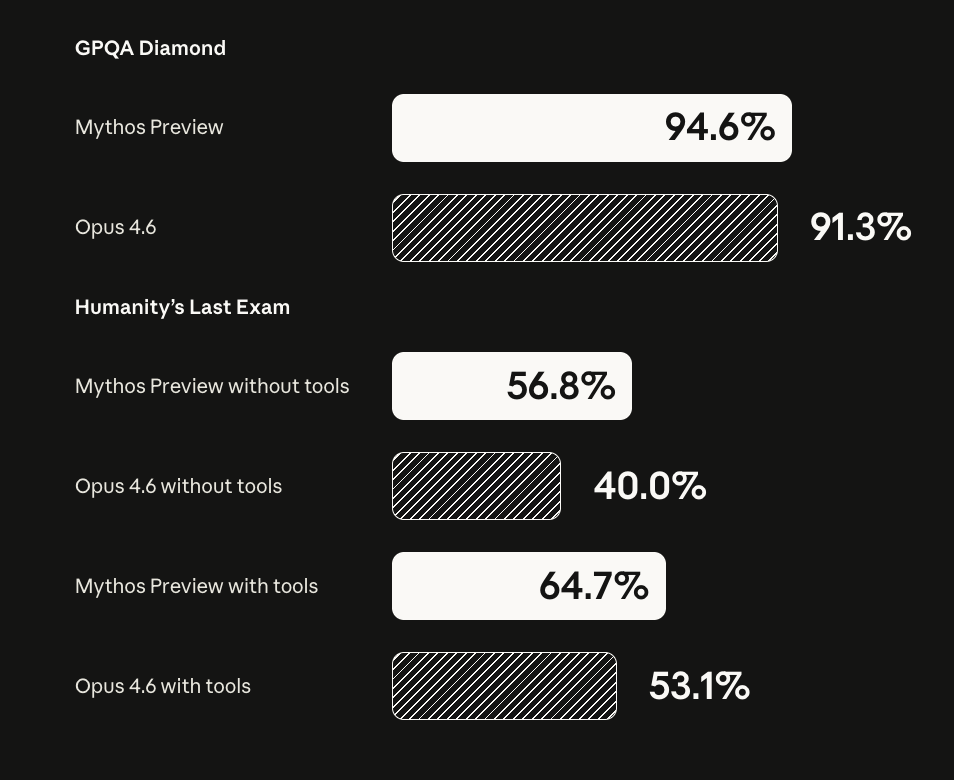
What makes this notable is not simply that the model performs well at coding tasks, but that it operates at a level where it can meaningfully contribute to or automate parts of a workflow that has traditionally required highly specialized expertise. Security research, at the level of vulnerability discovery, is not a domain where surface-level competence is useful. It requires a combination of systems understanding, creativity, and persistence. The fact that a general-purpose model is beginning to exhibit these characteristics suggests that improvements in core model architecture and training are reaching thresholds where new classes of behavior emerge.
Emergent Capability, Not Targeted Training
Anthropic also emphasizes that these capabilities were not the result of narrowly training the model for security tasks. Instead, they appear to arise from broader improvements in reasoning, coding, and agentic behavior. This is an important point because it suggests that some of the most significant changes in AI systems may not come from targeted feature development, but from the accumulation of general capabilities that, once sufficiently advanced, begin to express themselves in more specialized and consequential ways.
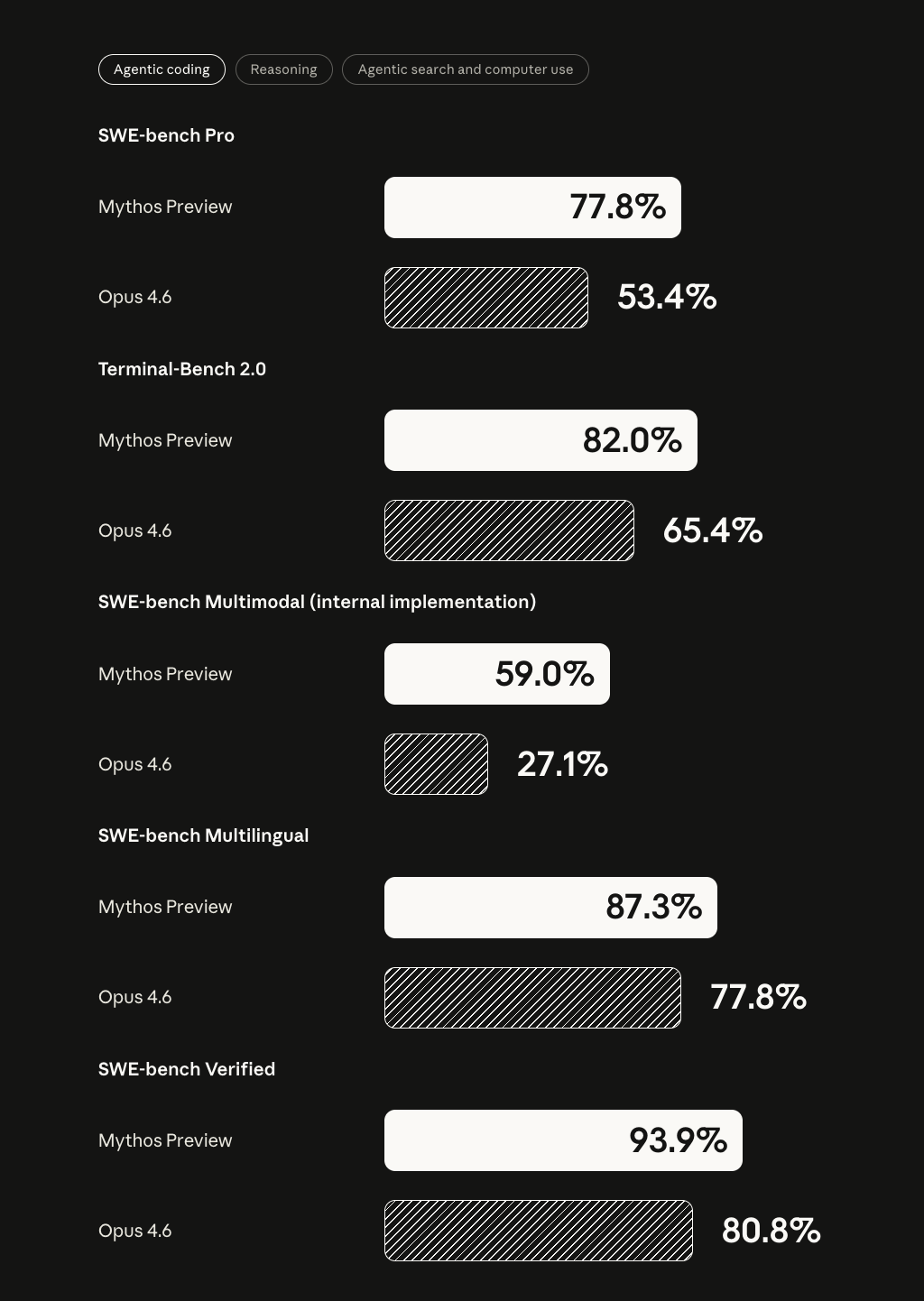
This pattern, where general improvements cross a threshold and unlock new classes of behavior, is not unique to any single domain. It is likely to appear across scientific research, legal analysis, financial modeling, and other areas that have historically required narrow expertise. The implication is that organizations cannot predict where the next capability threshold will land simply by watching which benchmarks a model is trained to optimize.
When placed alongside the trend toward smaller models, Mythos helps clarify that the AI landscape is becoming increasingly bifurcated. On one side, there is a push toward making models lighter, faster, and more deployable. On the other, there is a push toward increasing capability in ways that expand what AI systems can actually accomplish. These two directions are not in conflict, but they do operate under different constraints and serve different purposes.
Governance as a Signal
This difference is reflected in how Anthropic is choosing to handle Mythos. Rather than releasing it broadly, the company has opted to restrict access and channel its use through a structured initiative, indicating that the capabilities involved are not viewed as suitable for open distribution. This stands in contrast to the way many smaller or more general-purpose models are released, and it signals that as AI systems become more capable, the way they are deployed and governed may begin to diverge significantly from current norms.
The fact that a frontier lab is making active deployment decisions based on capability risk is itself meaningful. It suggests that the industry is beginning to internalize a distinction between systems that expand access and systems that require oversight. This is not a temporary limitation but a structural feature of how high-capability AI will be managed going forward.
For organizations thinking about governance, this is a useful reference point. The question is not only what a model can do, but what kind of access model surrounds it, and whether your organization is positioned to operate within that access model responsibly.
What This Means for Enterprise Strategy
For organizations thinking about how to engage with AI, this creates a more complex landscape. It is no longer sufficient to evaluate models purely on performance benchmarks or cost efficiency. There is now a need to consider where a given system sits along these different fronts. Some applications will benefit from smaller, more efficient models that can be widely deployed. Others may require access to more capable systems, where the value comes not from scale of deployment, but from the depth of capability they provide.
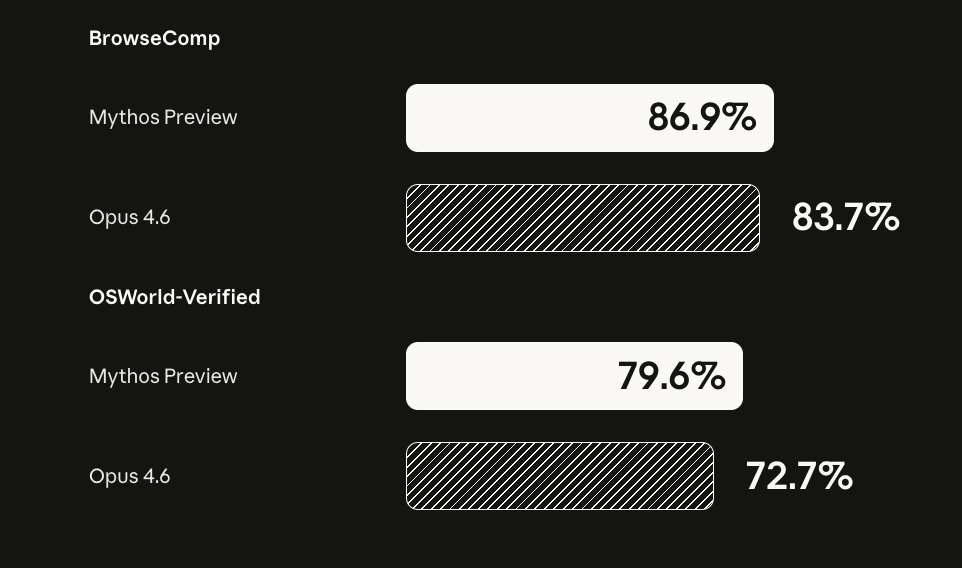
The broader implication is that AI strategy is becoming less about selecting a single model or approach and more about understanding how different types of systems fit together. The same organization may find value in deploying lightweight models across its operations while also leveraging more advanced systems in specific, high-impact areas. Ignoring either side of this development risks missing a significant part of what AI is becoming.
The trajectory suggested by Mythos is not simply that models will continue to improve in a general sense, but that improvements will begin to matter in more consequential ways. As systems become capable of operating effectively in complex domains, the impact of those capabilities extends beyond efficiency gains and into areas that affect risk, competitive advantage, and the nature of expert work itself.
The future of AI, then, is not defined by a single trend, but by the interaction of multiple ones. Some models will continue to make intelligence cheaper and more portable, extending its reach across industries and use cases. Others will push the boundaries of what that intelligence can do, introducing new capabilities that reshape how certain types of work are performed.
Understanding both is essential, because together they define not just how widely AI will spread, but how deeply it will matter.
Source: Anthropic Mythos evaluation